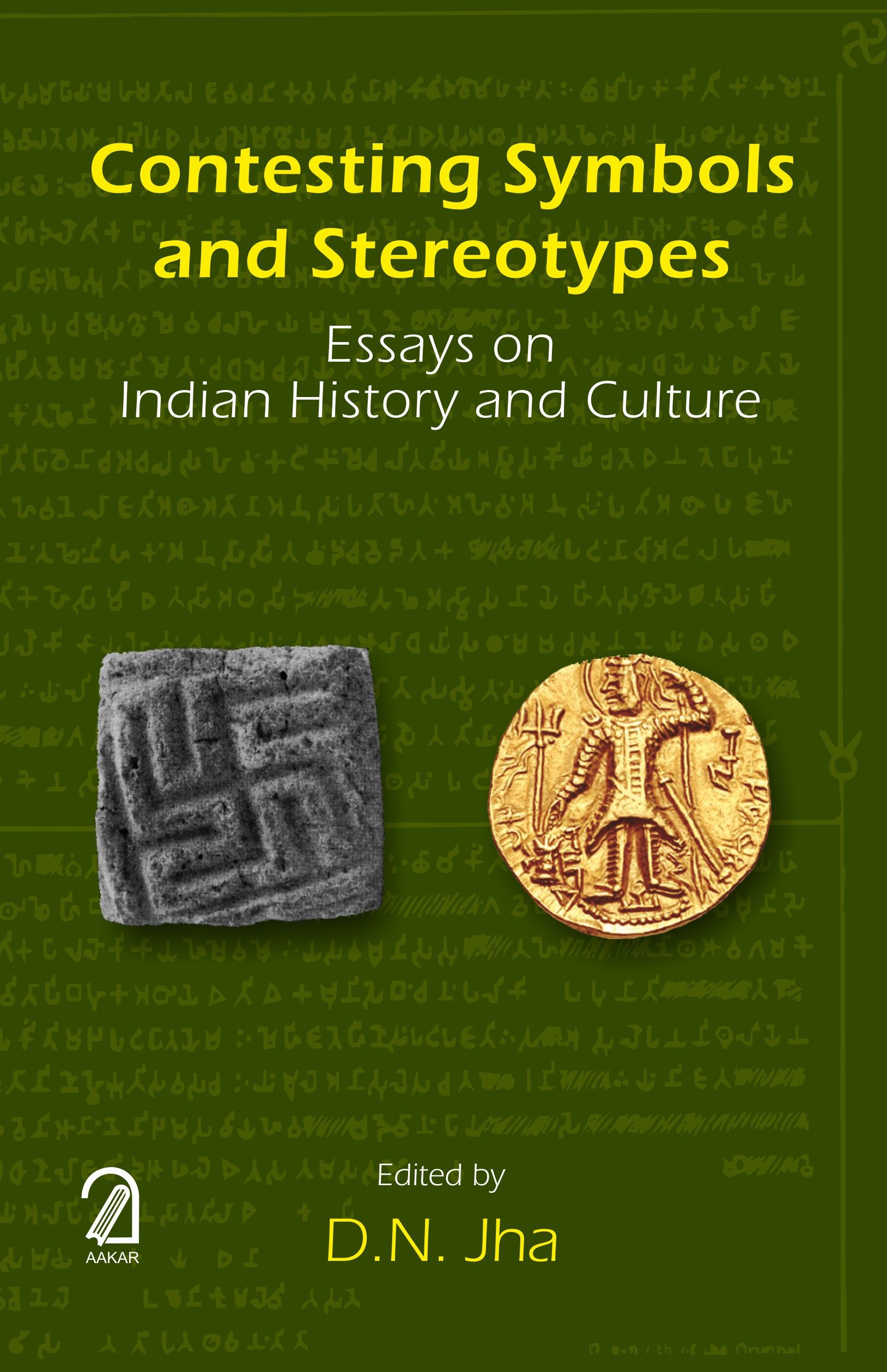
DescriptionThe construction of Hindu religious identity began in the late nineteenth century and has continued unabated. Accompanied by the demonization of minorities, especially Muslims, and the creation and propagation of absurd ideas about Hinduism, the Hindu identity has become increasingly aggressive in its manifestations. Its ideologues incessantly try to create fanciful stereotypes about Hinduism and, redefining its boundaries is their monomania. By projecting Rama as the supreme god, denying the diversity of religious beliefs and practices, negating the plurality of epic traditions, and by appropriating and inventing cultural symbols of questionable Hindu association, they present a grossly falsified view of India’s past. They censure anything that does not fit into their scheme. They burn books that do not endorse their view, vandalize objects of art which they consider blasphemous, and demonstrate against films which present a counter point to their propaganda. They distort Indian history and religion, and nurture a culture of intolerance. The essays in the present anthology are intended to counter some of the many distortions they have introduced in the common man’s perception of Indian identity, religion and culture, and thus damage the rich mosaic of social and cultural diversity which India represents.D.N. Jha was educated at the Presidency College, Calcutta, and Patna University where he taught history for more than a decade. He moved to Delhi University in 1975 and was soon elevated to the post of Professor in which capacity he served there until his retirement. A UGC National Lecturer in History (1984-85) and Honorary Research Fellow, Indian Institute of Advanced Study, Shimla (1991-92), he was Secretary, Indian History Congress (1986-89) which honoured him with the prestigious H K Barpujari Award (1995) and later elected him its General President (2005-06). Associated with several academic bodies, he was also elected Sectional President of Andhra Pradesh History Congress (1987) and General President, Punjab History Conference (1999).An acclaimed historian, Professor Jha is the author of Revenue System in Post-Maurya and Gupta Times (1967), Ancient India (1977, 1998), Studies in Early Indian Economic History (1979), Ramjanmabhumi-Baburi Masjid: A Historian’s Report to the Nation (1991), jointly with R S Sharma et al), Economy and Society in India: Issues and Paradigms (1993), Holy Cow: Beef in Indian Dietary Traditions (2001) reprinted as The Myth of the Holy Cow (2002, 2004, 2009), Early India (2004), and Rethinking Hindu Identity (2009). His edited works in English include Society and Ideology in India (1993), The Feudal Order (2001), Mind and Matter: Essays on Mentalities in Medieval India (jointly with Eugenia Vania, 2009) and The Many Careers of D D Kosambi (2011). His current interests focus on early heresies, construction of Hinduism, and land, caste and power in early India.
Gallery
Share dream swing footrest
This website uses cookies to improve your experience. We'll assume you're ok with this, but you can opt-out if you wish. Cookie settingsACCEPT
Privacy & Cookies Policy
Privacy Overview
This website uses cookies to improve your experience while you navigate through the website. Out of these cookies, the cookies that are categorized as necessary are stored on your browser as they are essential for the working of basic functionalities of the website. We also use third-party cookies that help us analyze and understand how you use this website. These cookies will be stored in your browser only with your consent. You also have the option to opt-out of these cookies. But opting out of some of these cookies may have an effect on your browsing experience.
Necessary cookies are absolutely essential for the website to function properly. This category only includes cookies that ensures basic functionalities and security features of the website. These cookies do not store any personal information.
Any cookies that may not be particularly necessary for the website to function and is used specifically to collect user personal data via analytics, ads, other embedded contents are termed as non-necessary cookies. It is mandatory to procure user consent prior to running these cookies on your website.